Blog
How Crash Games Work: Aviator, Limbo and the Multiplier Curve
A crash game looks almost too simple to explain: a number climbs from 1.00×, and you decide when to stop it. That simplicity hides three genuinely different mechanics, a house edge you can calculate yourself, and a pace of play that catches more players off guard than any slot reel. This guide breaks down how Aviator, Limbo, Space XY, Chicken Road and Penalty Unlimited actually work under the hood, what their RTP numbers mean in practice, and where the real risk sits.
What Makes a Casino Game a “Crash Game”
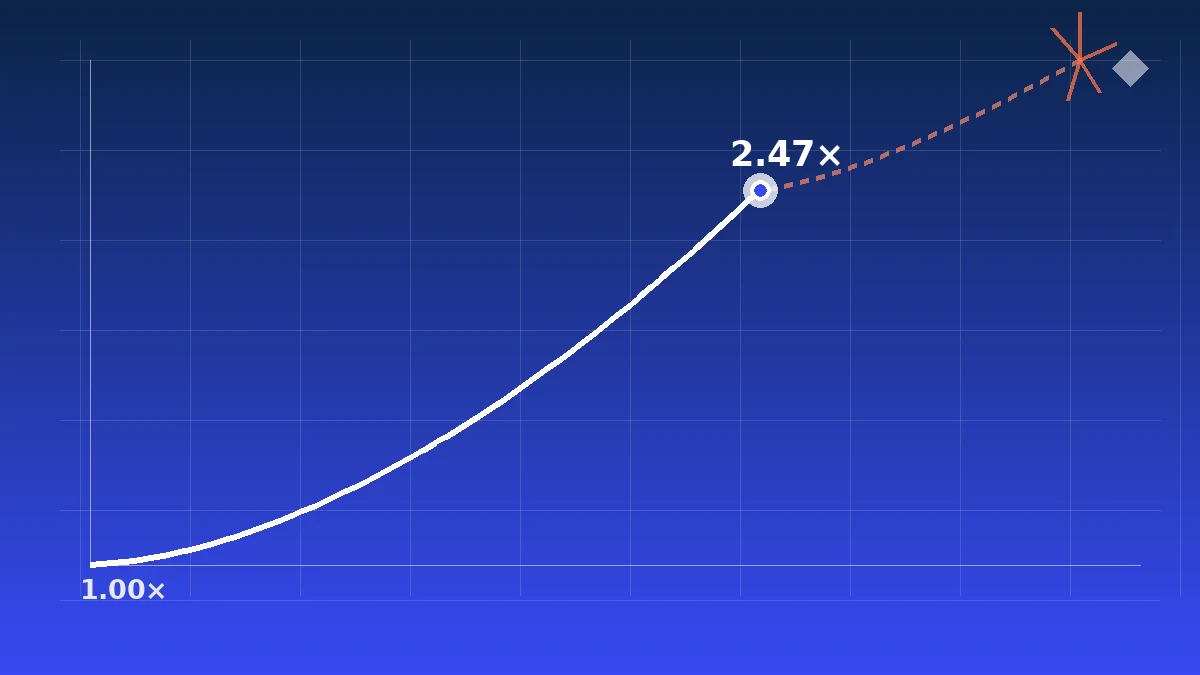
Every crash game runs on the same wager-then-watch loop: you place a stake before the round starts, a multiplier begins rising from 1.00×, and a random crash point ends the round at some unknown value. Cash out before that point and you collect stake × multiplier; wait too long and the round crashes with your bet still in play. Spribe’s Aviator popularized the aviation-themed version of the format in 2019, and by 2026 crash titles sit alongside slots and live dealer tables as one of the fastest-growing categories in online casinos — largely because a round lasts seconds, not minutes, which fits how people actually play on a phone between other things.
Three Different Mechanics Hiding Behind One Label
“Crash game” is a genre name, not a single format. The five titles below split into three distinct mechanics, and knowing which one you’re playing changes how you should think about timing and risk.
Rising-curve games: Aviator and Space XY
This is the format most people picture: a live multiplier climbs on screen in real time, typically over a 5–30 second round, and you either cash out manually or set an auto cash-out target in advance. Aviator, built by Spribe, publishes a 97% RTP with unlimited max win and stakes from roughly $0.10 to $100. Space XY, from BGaming, uses the same rising-curve mechanic with a spaceship visual and a matching 97% RTP. Both are provably fair — the crash point is cryptographically fixed before the round starts, not decided on the fly.
Instant-result games: Limbo
Limbo removes the live curve entirely. You set a target multiplier before the round — anywhere from 1.01× to numbers in the millions — and the game generates one random result instantly. Hit your target or beat it and you win; fall short and the stake is lost, with no cash-out decision to make mid-round. Because the outcome is a single number rather than a timed reaction, Limbo is the purest of the five mathematically: there’s no reflex element, only the target you chose. RTP on Limbo varies more than on branded titles like Aviator, since many platforms run their own in-house version rather than licensing one studio’s game; some crypto-native casinos publish figures as high as 99%, so it’s worth checking the in-game rules panel rather than assuming a fixed number.
Step-multiplier games: Chicken Road and Penalty Unlimited
Both titles from InOut Games swap the continuous curve for discrete steps. In Chicken Road, each safe move across the board adds roughly 0.1×–0.5× to the multiplier depending on the difficulty level you pick, with easier settings paying less per step but crashing less often, and harder settings doing the opposite. Penalty Unlimited applies the same step-based logic to a football penalty-shootout theme. In both, you choose to cash out after any completed step or push for the next one — closer to a press-your-luck game than to Aviator’s continuous climb.
RTP and House Edge: Reading the Numbers Correctly
RTP and house edge describe the same thing from opposite sides: house edge equals 100% minus RTP. A 97% RTP game keeps 3% of total wagers for the house over a very large number of rounds — not per session, and not per player. On $1,000 in total wagers at 97% RTP, the theoretical loss works out to $30; at 99% RTP, it drops to $10. Individual sessions swing far more than these averages suggest, because crash games carry high variance: most rounds crash early, and the rare high multiplier is what keeps the long-run average intact.
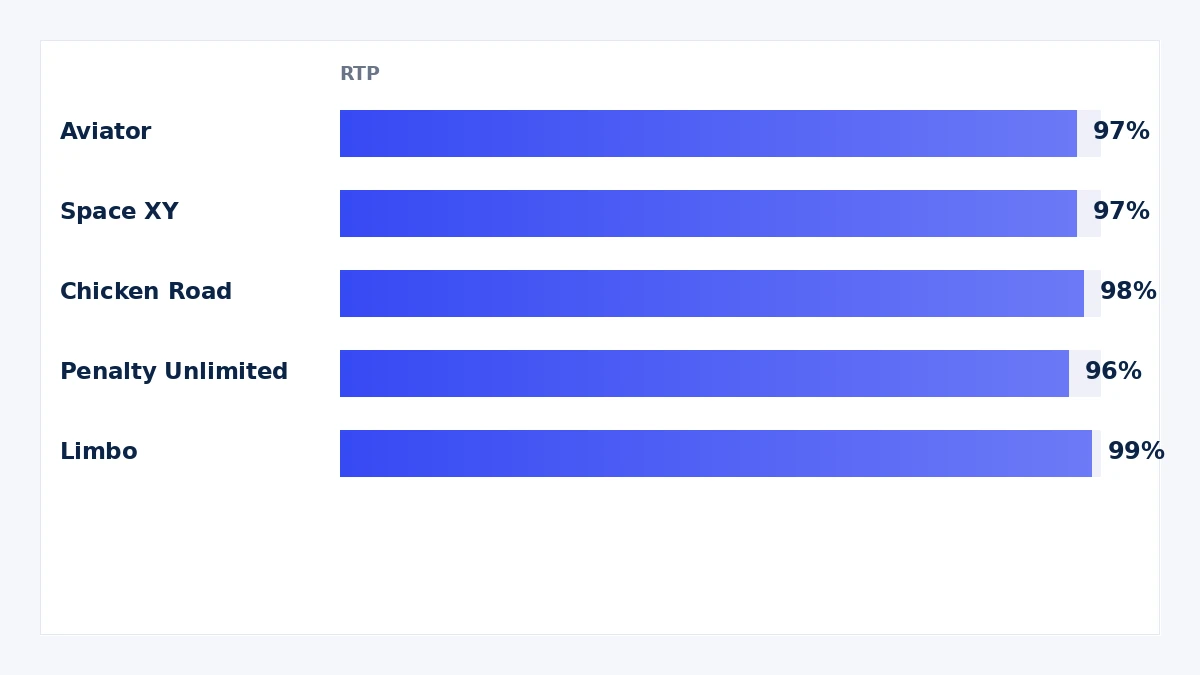
For the general mechanics of RTP and volatility across all game types, see our RTP and volatility guide. These are the commonly published figures for each title, though operators can run different configurations, and Limbo in particular varies by platform. Always check the specific game’s rules panel on the casino you’re using before relying on a number you read elsewhere.
Provably Fair: Verifying a Round Without Trusting Anyone
Provably fair removes the need to take a casino’s word for it. Before a round starts, the game commits to that round’s outcome by publishing a cryptographic hash (SHA-256 in Spribe’s case) — a fixed digital fingerprint of a result that hasn’t been revealed yet. Once the round ends, the underlying value is published too, and anyone can run it through the same hash function and confirm it matches what was shown before betting opened. If the numbers match, the crash point wasn’t adjusted after the fact. It’s a verification step worth doing at least once on any provider you play regularly, using the verification tool most crash-game studios publish alongside the game itself.
Betting Patterns That Don’t Change the Math
No staking pattern overcomes a fixed house edge, because each round is independent of the last. Progressive systems such as doubling your stake after every loss (martingale-style betting) can look safe over a handful of rounds, but the required bet size grows exponentially during a losing streak, and table or account limits — not to mention your own bankroll — will end the sequence before it recovers. What actually helps is picking a cash-out target before the round starts and sticking to it, using auto cash-out so a slow connection or a moment’s hesitation doesn’t cost the round, and treating flat, consistent bet sizes as the default rather than the exception.
Why Crash Games Warrant Extra Caution
Round length is the feature that makes crash games risky in a way slots often aren’t. A 5–30 second round means dozens of bets can go in within a few minutes, and that pace makes it easy to lose track of total spend even when each individual round felt small. Regulators have started treating this seriously: the UK’s National Risk Assessment raised the money-laundering risk rating for casino products from low to medium in part because of fast-play formats like crash games. The practical response is the same regardless of jurisdiction — set a deposit limit and a session-time reminder before you start, decide your stop-loss in advance rather than mid-session, and use self-exclusion tools if a session is running longer than planned. Crash games are built for players over 18 only, and none of the mechanics above change that.
Where to Go From Here
Full game data, provider details and demo access for each title live on their own pages: Aviator, Limbo, Space XY, Chicken Road and Penalty Unlimited. For a wider list of crash titles beyond these five, the crash games hub is the place to check next, and our top-rated casinos page is a reasonable starting point for comparing licensed operators before you play any of them for real money.