Tether, better known by its ticker USDT, is a stablecoin pegged to the US dollar, meaning one token is designed to hold a value of roughly one dollar regardless of what’s happening with Bitcoin or Ethereum on any given day. A tether casino accepts USDT deposits the same way it would accept any other cryptocurrency, through a wallet address, but the value sitting in the account doesn’t swing with market price the way ETH or BTC balances do. This article covers how USDT actually functions as a payment rail, which networks it runs on, what deposits and withdrawals cost, and what to check before relying on it for real-money play.The stability angle is the whole reason USDT gets used for gambling in the first place. A player who deposits 200 USDT can expect that balance to still represent roughly 200 dollars an hour later, a day later, or a week later, something that isn’t true of most other crypto assets. That single property shapes most of what follows.
The list below comes only from cashiers we opened ourselves and captured. As of 6 September 2026 that is two out of ten: Boomerang Bet and RetroBet, and Tether appears in both. The other eight operators have not been checked, so their absence from the list says nothing about them.
Rating a usdt casino involves checking more than whether USDT appears as a listed deposit option. The table below covers the practical factors that actually affect a player once funds are moving.
Criterion
What it covers
Network support
Whether ERC20, TRC20, and other USDT networks are all accepted, or just one
Fee transparency
Whether gas costs are disclosed clearly before a transaction is sent
Confirmation requirements
Number of block confirmations needed before a deposit is credited
Withdrawal processing
How quickly the operator reviews and releases USDT withdrawal requests
Licensing
Regulatory body overseeing the platform, where one exists
Game library depth
Range of providers and whether live dealer and table games are included
KYC policy
Whether identity verification is required before or only after a withdrawal
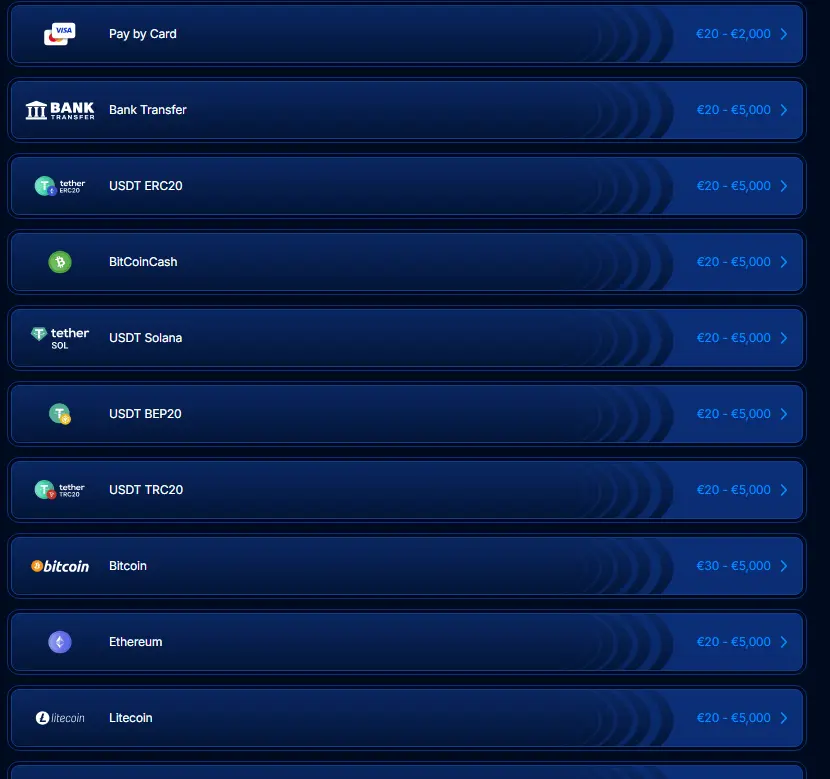
Network support ends up mattering more than most players expect going in. A casino that only accepts USDT on Ethereum’s ERC20 network will charge noticeably higher gas fees than one that also supports TRC20 on the Tron network, and the difference isn’t small during busy periods.One operator's payment list, 28 August 2026. USDT appears four times because the network matters: send to the wrong one and the money is gone.
What is Tether and How Does it Work at Online Casinos?
Tether is issued by Tether Limited, which claims to hold reserves, cash and short-term instruments, equal to the USDT in circulation. Each token is meant to be redeemable for one US dollar, though in practice most players never redeem directly with the issuer, they trade USDT on exchanges instead. At a tether casino, the token functions purely as a deposit and withdrawal medium, the casino’s own accounting still tracks a player’s balance in dollar terms even though the underlying transfer happens on a blockchain.Technically, sending USDT means broadcasting a transaction on whichever network it was issued on, most commonly Ethereum, Tron, or Solana. The receiving casino generates a wallet address, the player sends the token to that address, and once enough network confirmations have passed the deposit gets credited. None of this differs structurally from how ETH or BTC deposits work, the only difference is that the token’s dollar value doesn’t move around while it sits in the wallet. Signing up at a tether online casino follows the same registration flow as any other operator, USDT only enters the picture once a deposit is made. Strip away the marketing and a casino online tether usdt integration is really just a wallet address and a confirmation count.
USDT vs Bitcoin for Casino Banking
Bitcoin transactions are confirmed on its own chain and typically take longer than USDT sent over Tron, though both are far faster than a bank wire. The real difference isn’t speed, it’s volatility. A Bitcoin deposit can lose or gain several percent in value before a withdrawal is processed, while USDT sitting in a casino balance stays close to its dollar peg the entire time. For players who want predictable balances, that distinction matters more than raw transaction speed.
Why Play at USDT Casinos?
The appeal isn’t really about gambling mechanics, it’s about what happens to the money before and after a session. Depositing stablecoins avoids the price swings that come with BTC or ETH, and withdrawals convert back to a stable value rather than whatever the market happens to be doing that day. Players who already hold crypto but don’t want gambling outcomes tangled up with market movement gravitate toward this setup for that reason specifically, not because the games themselves differ from any other platform. Tether online casinos built specifically around stablecoin deposits tend to advertise network fees more clearly than platforms that added USDT as an afterthought.
Which Network is Best for Depositing USDT?
USDT exists on several blockchains simultaneously, and the network chosen for a deposit affects both cost and speed. Sending to the wrong network address, or using a network the casino doesn’t support, risks losing the funds entirely, so this step deserves attention before any deposit is made.
Network
Typical fee
Typical confirmation time
TRC20 (Tron)
Under $1, often a fraction of a cent
Seconds to a couple of minutes
ERC20 (Ethereum)
$2-20+, fluctuates with network congestion
1-15 minutes depending on gas paid
Solana (SPL)
Fractions of a cent
Seconds
Omni (Bitcoin-based)
Variable, tied to Bitcoin network fees
10-60 minutes
TRC20 has become the default recommendation on most crypto casino cashiers because the fee is negligible compared to Ethereum’s network. That said, not every casino supports every network, and sending USDT over a network the platform doesn’t recognise usually means the deposit never gets credited at all. A tether casino that only supports Ethereum’s ERC20 network puts players in a difficult spot when gas prices spike.
How to Make USDT Deposits at Online Casinos
The mechanical steps are consistent across most platforms. A wallet holding USDT, whether an exchange balance or a self-custody wallet like Trust Wallet or MetaMask, sends the token to an address generated by the casino’s cashier. The transaction needs to specify the correct network, mismatching it with what the casino expects is the most common deposit error. Once the required confirmations clear, the balance updates and the funds are available to play with, usually within a few minutes on TRC20 and somewhat longer on Ethereum. An online casino USDT deposit clears once the required confirmations are reached, the casino’s own crediting delay is usually the longer wait. Confirming network compatibility before sending funds is the single most common mistake new players make at a usdt casino.
How to Withdraw from USDT Casinos
Withdrawals follow the reverse path but move at a pace set by the casino’s internal review rather than the blockchain. A request goes into a queue, gets checked against KYC and wagering requirements, and only then does the operator broadcast the transaction to the network.
Stage
Typical timing
Casino review
A few hours to 3 business days
Network broadcast
Near-instant once approved
Confirmation on-chain
Seconds to minutes depending on network
Minimum withdrawal
Commonly 20-50 USDT equivalent, varies by operator
Fees, Confirmations, and Wallet Safety at Tether Casinos
Network fees for withdrawals are usually deducted from the amount sent rather than charged separately, though some operators absorb them instead. Confirmation counts required before a withdrawal is considered final vary by network, Tron generally needs fewer than Ethereum. Wallet safety comes down to double-checking the receiving address before submitting a withdrawal request, since a transaction sent to the wrong address on a blockchain has no reversal mechanism once broadcast.
Best USDT Bonuses and Promotions for 2026
Bonus structures at a tether casino generally mirror what’s available elsewhere, calculated in dollar-equivalent terms since USDT’s value doesn’t fluctuate the way other crypto balances do.
Promotion type
Typical structure
Welcome bonus
Percentage match on first deposit, often 100-150% up to a cap
Weekly cashback
5-15% return on net losses, calculated weekly
Rakeback
Partial return of the house edge generated during play, typically 5-10%
VIP tiers
Progression-based rewards tied to cumulative wagering volume
Tournaments
Leaderboard prizes split across ranked finishers over a fixed window
Welcome Bonus for First USDT Deposits
First-deposit matches tend to run higher than average at crypto-focused operators, since USDT deposits carry lower processing overhead than card payments. The wagering requirement attached still matters more than the headline number, a 150% match with a steep rollover can be worth less in practice than a smaller offer with reasonable terms.
Weekly Cashback and Rakeback
Cashback returns a portion of net losses over a set period, while rakeback specifically returns a slice of the house edge generated on wagers regardless of overall win or loss. Both function as loss mitigation tools rather than bonuses in the traditional sense, since they only pay out meaningfully when the player has been losing.
VIP Progression and Status-Based Perks
Loyalty tiers reward cumulative volume rather than single deposits, with higher levels sometimes unlocking faster withdrawal review or a dedicated account contact. Reaching the upper tiers usually takes sustained play across weeks, not a single session.
Tournaments and Weekly Contest Promos
Leaderboard contests rank players by wagering volume or win multipliers on specified titles, with prize pools split across a fixed number of finishing positions. Entry is typically automatic once a qualifying bet is placed during the contest window.
Promo Availability At Top Tether Casinos
Promotion availability isn’t uniform across every platform that lists USDT. Some restrict certain bonuses to card or fiat deposits only, which is worth checking before assuming a stablecoin deposit automatically qualifies for every offer advertised on the homepage.
Factor
What to check
Deposit method exclusions
Whether the promo terms exclude crypto or stablecoin deposits specifically
Wagering requirement
Rollover multiplier attached to the bonus amount
Game weighting
Which games count fully toward wagering and which are reduced or excluded
Maximum bet while active
Bet cap enforced while a bonus balance is in play
What We Check Before Claiming Any Promo at USDT Online Casinos
Beyond the headline percentage, the review process looks at expiry windows, whether winnings convert to withdrawable cash or stay locked as bonus funds, and whether the operator has a history of voiding bonuses over technicalities. None of this is unique to crypto deposits specifically, but the review still gets applied consistently across every top usdt casinos listing rather than skipped for platforms with a strong marketing push. Comparing tether casino sites side by side on promo terms alone misses half the picture without checking network fees too.
Games You Can Play at the Best Tether Casinos
Game selection at platforms supporting USDT doesn’t differ structurally from any other online casino, the payment method sits behind the scenes and doesn’t gate access to specific titles in most cases.
Category
Typical offering
Table games
Blackjack, roulette, baccarat variants across multiple providers
Live dealer
Streamed tables with human dealers, often licensed from a handful of major studios
Slots
Hundreds to thousands of titles depending on the operator’s provider agreements
Specialty and instant games
Crash games, dice, and simplified card games, some built with provably fair mechanics
Table Games
Blackjack and roulette variants make up the bulk of table game libraries, sourced from a mix of established studios and smaller specialist providers. Rule variations between tables, number of decks, side bets, payout structure, are worth checking since they affect the house edge more than the payment method ever does.
Live Dealer
Live tables stream in real time from studios operated by a small number of major providers, licensed out to individual casinos rather than built in-house. Latency and stream quality depend more on the provider than on the casino itself.
Slots
Slot libraries vary enormously in size, from a few hundred titles to several thousand, depending on how many software providers a platform has integrated. Volatility, RTP, and theme are the relevant factors here, none of which change based on whether the deposit was USDT or a card.
Specialty and Instant Games
Crash and dice games are common on crypto-first platforms specifically, often built with provably fair verification that lets a player confirm a result wasn’t altered after the bet was placed. These titles are usually developed in-house rather than licensed from third-party studios. A usdt online casino that leans heavily on these instant titles usually pairs them with faster internal review times too, since the same infrastructure tends to support both.
Is Playing at a USDT Casino Legal?
Legality depends entirely on the player’s local jurisdiction and has nothing to do with the payment method itself. Some regions permit licensed online gambling outright, others restrict it heavily or ban it, and using USDT instead of a card doesn’t change which category a given location falls into.
Where Online Casino Gaming Is Legal
Regulatory frameworks for online gambling differ significantly by jurisdiction, some license and tax operators directly, others prohibit the activity or leave it in a legal grey area. Checking local law before depositing, in any currency, remains the player’s responsibility rather than the casino’s.
Playing With USDT Via International Brands
Operators licensed in one jurisdiction sometimes accept players from regions where the operator itself isn’t specifically licensed, a practice that varies in legal standing depending on where the player is located. USDT doesn’t change this dynamic, it’s simply the payment rail being used underneath whatever legal framework already applies.
USDT Casinos vs Traditional Online Casinos
The core distinction is settlement speed and who controls the transaction. A card or bank deposit routes through several intermediaries capable of delaying or reversing it. A USDT transaction goes directly from wallet to wallet, confirmed by network validators rather than a bank’s fraud system, with no chargeback option once it’s sent. That trade-off, speed and directness against the safety net of reversibility, is the main thing separating the two models.
How We Rank Casinos Accepting USDT
Ranking a casino USDT listing combines the criteria already covered: network support, fee transparency, withdrawal speed, licensing, and game library depth. No single factor outweighs the others completely, a platform with excellent games but opaque fee handling ranks lower than one that’s more transparent even with a smaller library. Every casino crypto USDT review on this page follows the same rating criteria regardless of how the operator markets itself, and the best usdt casinos on any given list should hold up under that same scrutiny every time it’s applied.
Responsible Gambling
Deposit limits, self-exclusion tools, and reality check prompts should be available regardless of payment method, and their presence gets checked independently of whether a platform accepts USDT. A tool that exists in the terms and conditions but isn’t accessible from account settings doesn’t count as functional, whether the deposits involved are stablecoins or a debit card. A tether casino has no special exemption from responsible gambling requirements just because deposits happen on-chain, and tether online casinos that skip these tools entirely should be treated as a red flag rather than an oversight.
Our Verdict
USDT solves a specific problem for crypto users: it removes the price volatility that comes with depositing Bitcoin or Ethereum while still keeping transactions on-chain and independent of card networks. A tether casino sites listing that publishes clear network fees and realistic withdrawal timing is generally more trustworthy than one that markets the payment method without explaining how it actually works. Among the best usdt casinos worth considering, network flexibility and licensing transparency separate the reliable operators from the ones that simply added a crypto logo to their cashier page. There’s no single best usdt casino for every player, since network support and withdrawal speed matter more than any bonus headline, and reviews of top usdt casinos tend to weigh withdrawal consistency more heavily than bonus size for exactly that reason.
FAQs
Are there fees at USDT casinos?
Network fees apply on the blockchain side regardless of the casino, and these vary significantly depending on which network is used, Tron is typically cents while Ethereum can run several dollars during busy periods. Some operators also apply their own withdrawal fee on top, which is separate from the network cost.
Can you withdraw USDT without KYC?
Some platforms allow smaller withdrawals without full identity verification, but most require KYC once a withdrawal crosses a certain threshold or after a set number of transactions. Policies vary enough between operators that this should be confirmed directly rather than assumed, and that threshold-based approach applies at nearly every regulated crypto casino operating under a real licence. A casino USDT policy that skips verification entirely, even at small amounts, is worth treating as a warning sign rather than a convenience.
Which Tether casinos offer the most reliable payouts?
Reliability comes down to consistent adherence to stated processing windows rather than any single feature, and it’s the kind of thing that shows up in player complaint patterns over time rather than in marketing copy. Checking independent complaint forums alongside the casino’s own terms gives a more complete picture than either source alone, and that pattern is usually a better indicator of a best usdt casino than any promotional banner.
What online casinos accept USDT?
A growing number of operators list USDT alongside Bitcoin and Ethereum in their crypto cashier, usually supporting at least TRC20 and often ERC20 as well. Coverage keeps expanding as more platforms add stablecoin support specifically to reduce the volatility complaints tied to BTC and ETH deposits. Finding the best tether casino for a given player usually comes down to network support and withdrawal consistency rather than bonus size.
How long do USDT casino payouts take?
The blockchain confirmation itself is fast, often under a few minutes on Tron, but the casino’s own review process is usually the longer part of the wait, ranging from a few hours to a few business days depending on the operator and the size of the withdrawal.
A list of casinos accepting this payment method will appear here.