Blog
How to Tell If an Online Casino Is Safe: A Trust Checklist
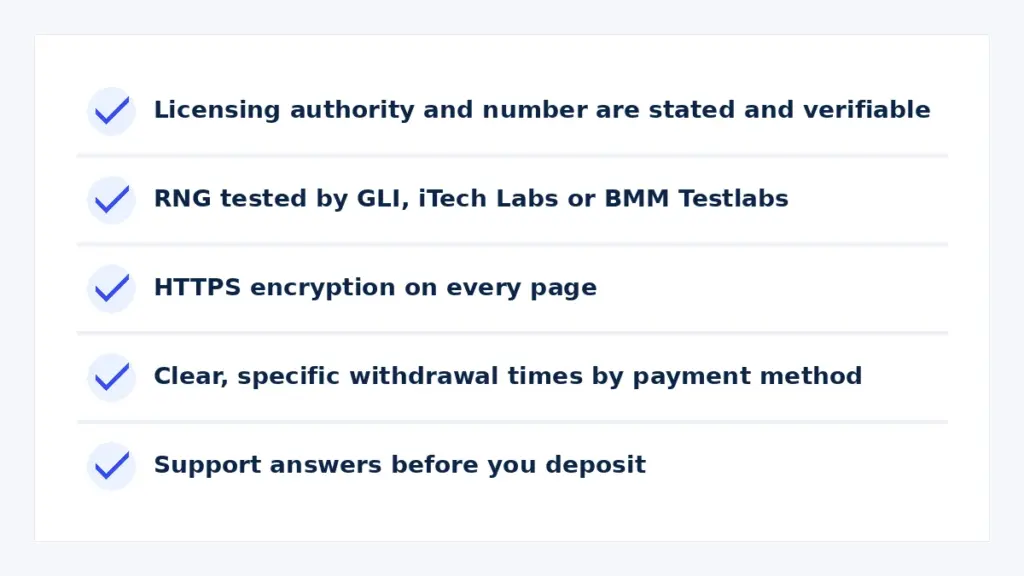
A polished homepage and a long list of games say nothing about whether an online casino actually pays out, protects your data, or runs games that aren’t quietly tilted against you. Those things are checkable in a few minutes, before a deposit goes in rather than after a withdrawal gets stuck. Here’s what actually separates a safe operator from one that just looks like one.
Start With the License
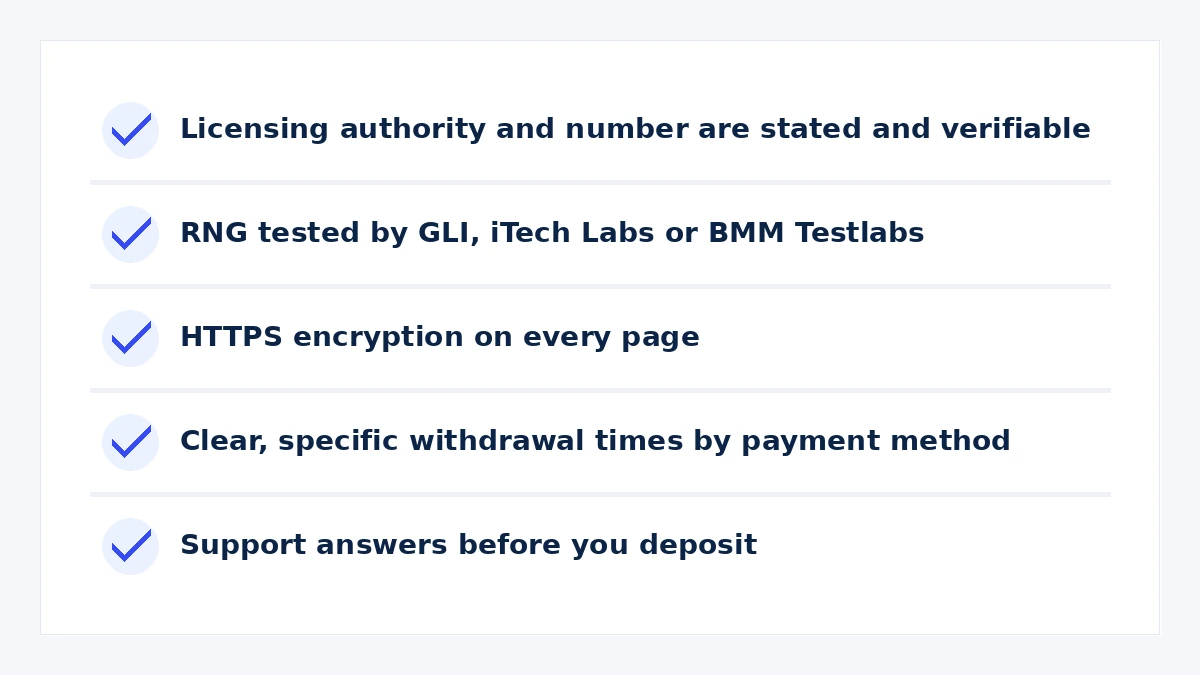
A license is what makes every other check on this list enforceable — without one, there’s no regulator to complain to if something goes wrong. A legitimate operator states its licensing authority and license number clearly, usually in the site footer, and that number should be searchable on the regulator’s own public register rather than taken on faith from a badge image. Our guide to casino licenses covers what the major licensing bodies actually require. A badge with no license number next to it, or a number that doesn’t show up on the regulator’s own database, is a reason to stop right there.
Independent Game-Fairness Testing
A badge with no license number next to it, or a number that doesn’t show up on the regulator’s own database, is a reason to stop right there.
Licensed operators are required to have their random number generators tested by an accredited independent lab, and the current bodies doing that work are Gaming Laboratories International (GLI), iTech Labs and BMM Testlabs — a legitimate seal from one of these should be clickable and lead to a verification page on the lab’s own site, not just sit there as an image. Testing-lab seals have a shelf life: some older, once-common names in this space have since shut down, so a badge alone proves less than it used to — what matters is whether the seal still links to a live, current certification. Crash-style games work differently: instead of a lab certifying the RNG in advance, the result is provably fair and verifiable round by round, which our crash games guide covers in detail.
Security Basics You Can Check in Ten Seconds
The address bar padlock and an https:// URL confirm the connection between you and the site is encrypted — standard on any legitimate casino and something to check before entering payment details anywhere. Beyond that, a casino that names its payment processors and offers recognizable banking options is generally a better sign than one that only accepts obscure, hard-to-trace payment channels.
Payment and Payout Transparency
How clearly a casino states its withdrawal times is one of the more reliable signals available before you’ve deposited a cent. Legitimate operators publish specific processing windows by payment method rather than a vague “withdrawals may take several business days,” and actual payout speed shows up consistently in player reviews and forum discussion if you search for it. Extended, unexplained “pending” periods on withdrawals — beyond what the stated policy describes — are one of the most common complaints about operators that later turn out to be unreliable.
Test Customer Support Before You Deposit
Sending one simple question to support before funding an account costs nothing and reveals more than most reviews do: response time, whether an actual person answers, and whether they can explain their own withdrawal policy clearly. Support that’s slow or evasive before you’ve deposited a cent rarely improves once you have money on the platform.
Red Flags That Should End the Conversation
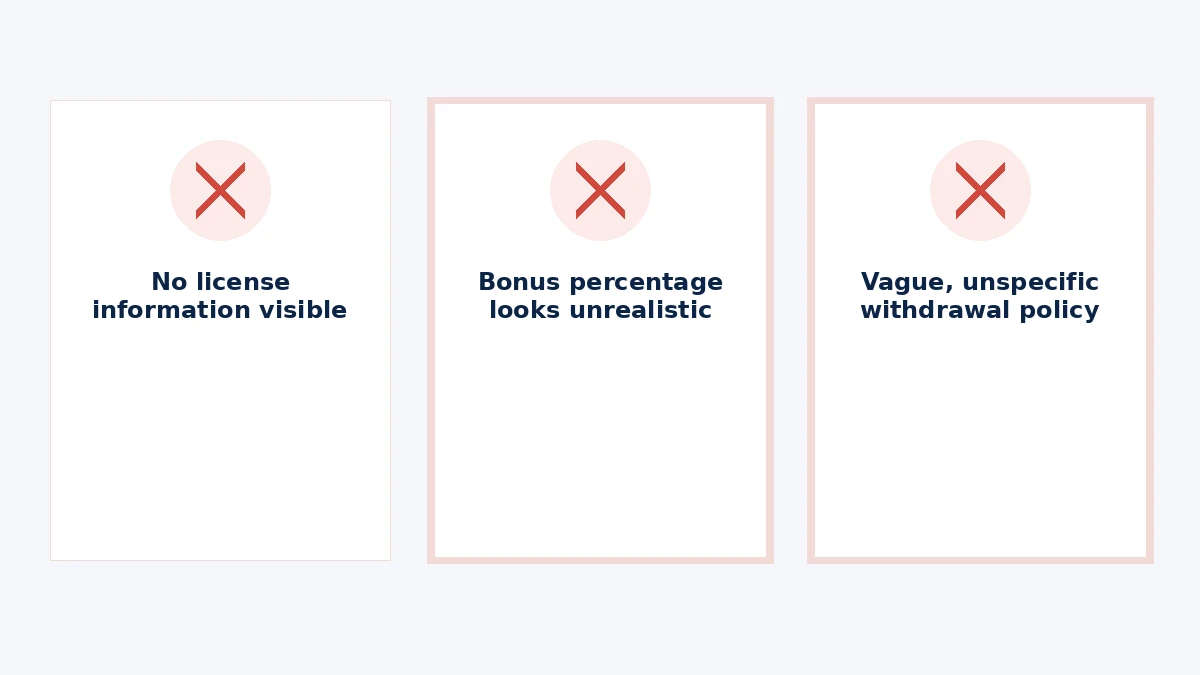
A few warning signs are common enough across unreliable operators to treat as disqualifying on their own. No licensing information visible anywhere on the site. Bonus offers that sound implausible — a 1000% match or similar — are usually paired with wagering terms so restrictive they’re functionally unclaimable; our wagering requirements guide explains exactly what to check before assuming a big number is a good deal. Crypto-only payment options with no operating history or verifiable company address. And withdrawal policies vague enough that you can’t find a specific processing time stated anywhere. Any one of these is worth a second look; more than one is a reason to pick a different operator.
Where to Go From Here
Licensing bodies and what they actually require are covered on our casino licenses page, and our top-rated casinos page is a reasonable starting point once you know what you’re checking for. If limits and budgeting matter as much as trust does, our responsible gambling guide covers the tools worth setting up before you play anywhere.