Blog
Responsible Gambling: Warning Signs and the Tools That Help
Every guide on this site assumes gambling is entertainment with a budget attached, not a way to make money. That assumption only holds if the budget actually holds — and the tools to keep it that way exist on nearly every regulated casino, most players just never open the settings menu where they live. This covers the warning signs worth taking seriously, the tools that actually work, and where to find real support if a session stops being about entertainment.
What Responsible Gambling Actually Means
Responsible gambling means treating stakes as the price of entertainment, decided in advance, rather than money you expect to get back. In practice that comes down to three habits: setting a budget before you start rather than deciding as you go, treating losses as the cost of the session rather than a debt to recover, and stopping at a predetermined point regardless of whether that point is a win or a loss. None of the math in our other guides — RTP, volatility, wagering requirements — changes what happens if those three habits slip.
Warning Signs Worth Taking Seriously
A handful of patterns show up consistently in research on problem gambling, and none of them require a crisis to be worth noticing. Betting more money or more time than planned on a regular basis. Chasing losses by increasing stakes to win back what’s gone. Hiding the amount or frequency of play from people close to you. Using money set aside for bills, rent or other essentials. Feeling restless or irritable when trying to cut back. Thinking about gambling constantly between sessions — planning the next one, replaying the last one, calculating how to recoup a loss. Gambling specifically to escape stress, boredom or a bad mood, rather than for the entertainment itself. Any one of these on its own isn’t a diagnosis, but noticing several of them at once is a reasonable point to act rather than wait.
A Quick Self-Check
Researchers and support services worldwide use a short, free, anonymous nine-question screen called the Problem Gambling Severity Index (PGSI) to gauge where someone sits on the spectrum from no-risk to problem gambling. It asks how often, over the past year, you’ve bet more than you could afford to lose, needed to gamble with larger amounts to get the same feeling, gone back to win back losses, borrowed money or sold things to gamble, or felt your gambling has caused you health, financial or relationship problems. If several answers land closer to “often” than “never,” that’s worth acting on rather than dismissing — the full screening tool is available for free through national problem gambling organizations and takes under three minutes.
The Tools Regulated Casinos Actually Provide
The decision that actually protects a budget is the one made before play starts, not the one made in the middle of a losing streak or a big win.
Most regulated operators build the same core set of controls into the account settings, and they cost nothing to use before there’s any sign of a problem — they work best set up in advance.
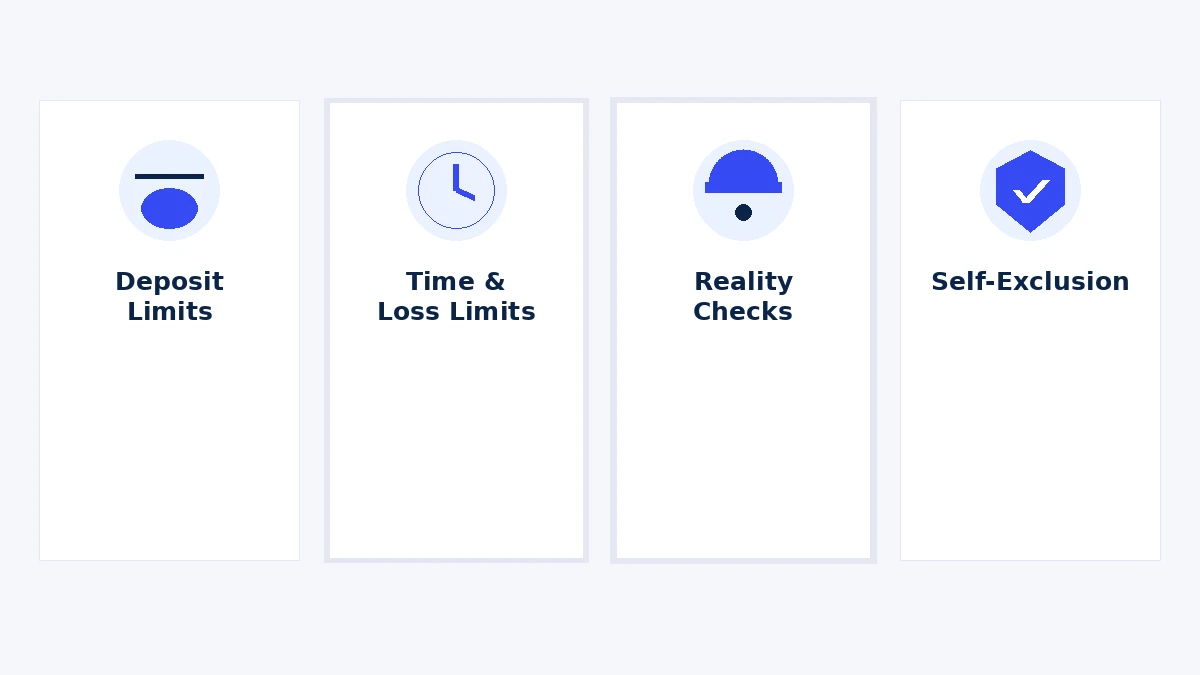
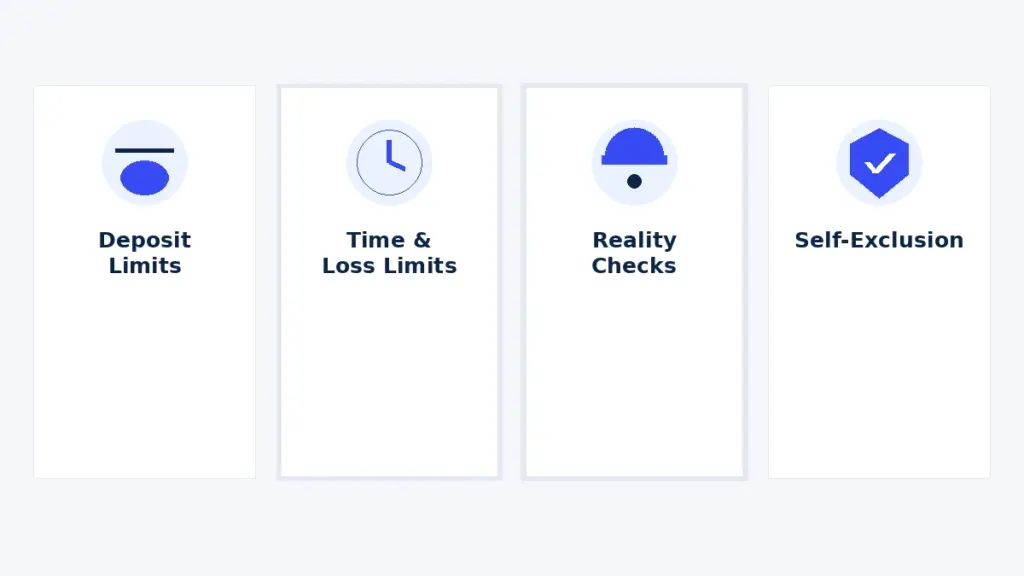
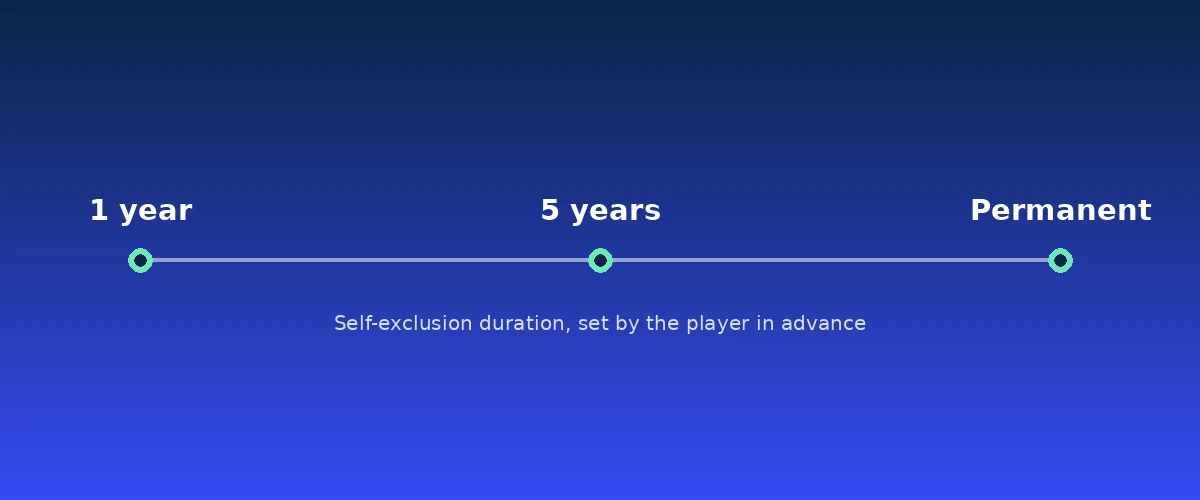
Deposit limits cap how much can be added to an account over a day, week or month, set below your actual gambling budget rather than at it. Time and loss limits cut a session off after a set number of hours or once losses hit a chosen ceiling, regardless of what’s happening in the game at that moment. Reality checks interrupt play at a fixed interval with a plain summary of time and money spent so far — useful precisely because that information is easy to lose track of mid-session. Self-exclusion is the strongest of the four: a formal block from an account, and often from other licensed operators through shared exclusion schemes, for a period the player sets in advance — typically ranging from one year to five years, or permanently.
Why Fast-Paced Formats Deserve an Extra Limit
Round speed changes how easily a budget slips without anyone noticing. A slot spin or a crash game round lasting a few seconds means dozens of bets can go in within minutes, and the total adds up faster than it feels like it should when each individual round felt small. A time limit set specifically for fast-round games, tighter than a general session limit, is a reasonable extra step regardless of how the bankroll or wagering math for a specific bonus is going.
Set the Limit Before You Need It
The tools above only work if they’re in place before a session starts, not mid-session when the instinct is usually to keep going. That’s the same principle behind bankroll sizing in our RTP and volatility guide and behind reading a bonus’s fine print before claiming it in our wagering requirements guide: the decision that actually protects a budget is the one made before play starts, not the one made in the middle of a losing streak or a big win.
Where to Find Real Support
Gambling-related harm is treated as a health issue by dedicated organizations, not a personal failing, and support is free and confidential. In the UK, GamCare runs the National Gambling Helpline and related digital support. In the US, the National Council on Problem Gambling connects players with state-level resources. Internationally, Gamblers Anonymous runs peer support meetings, both in person and online, in dozens of countries. All three are worth searching for directly rather than through a link on a casino site — that’s the safer way to confirm you’ve reached the real organization.
Where to Go From Here
The math behind slot volatility, crash-game mechanics and bonus wagering is covered in the linked guides above — none of it is useful without a budget that’s actually set in advance and actually held to.