Blog
How Wagering Requirements Work: Reading Bonus Terms Before You Claim
A bonus headline number — $500, 200 free spins, 100% match — is the least useful part of any casino offer. What actually decides whether a bonus is worth claiming is the wagering requirement attached to it: the amount you have to bet before any bonus-related winnings become withdrawable. Two bonuses of the same size can have completely different real value depending on that one number and the fine print sitting under it.
What a Wagering Requirement Actually Means
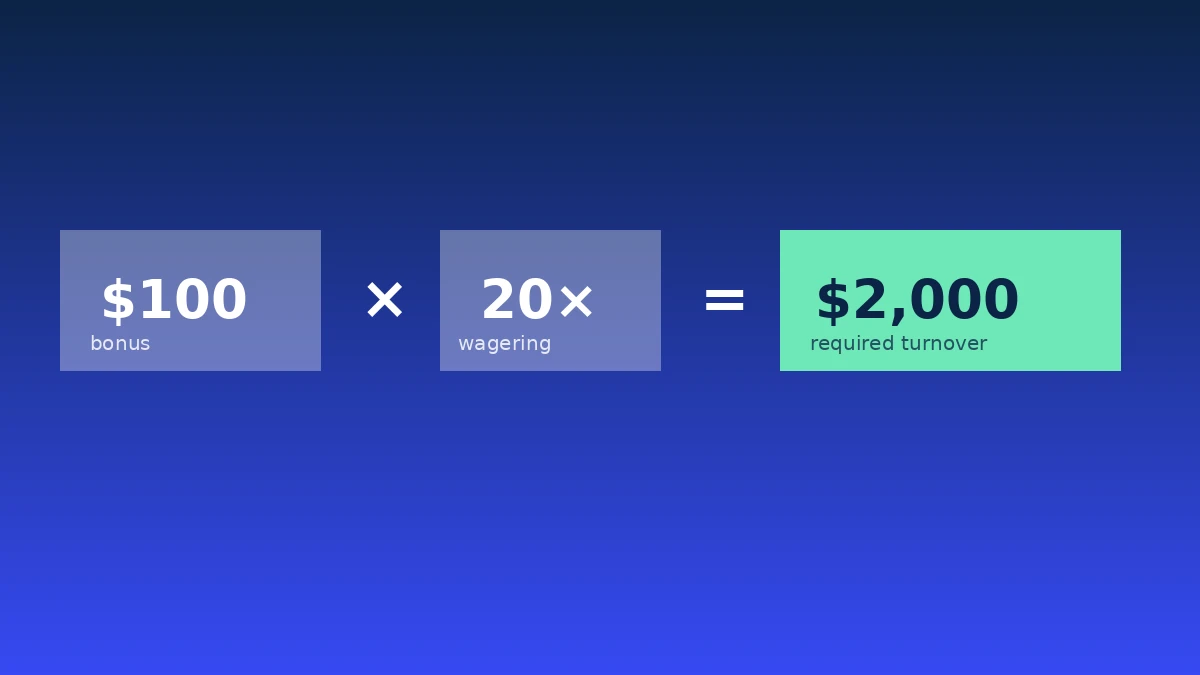
A wagering requirement (also called a playthrough or rollover) is a multiplier applied to a bonus amount, and it tells you the total turnover you need to generate before winnings tied to that bonus can be withdrawn. A $100 bonus with a 20x wagering requirement means placing $2,000 in total bets before that money converts into withdrawable cash. The multiplier, not the bonus size, is what determines how realistic clearing the offer actually is — a smaller bonus at 15x is often worth more in practice than a larger one at 50x.
Bonus-Only vs. Bonus-Plus-Deposit Wagering
Operators calculate the requirement two different ways, and the difference is significant. Bonus-only wagering applies the multiplier to the bonus amount alone: a $100 bonus at 20x means $2,000 to clear. Bonus-plus-deposit wagering applies the same multiplier to the bonus and the qualifying deposit combined: deposit $100, get a $100 bonus, and a 20x requirement now applies to $200 — $4,000 in total turnover instead of $2,000. The terms page for any offer will state which model applies; it’s usually the single biggest factor in how long a bonus actually takes to clear.
Game Weighting: Why Not Every Bet Counts the Same
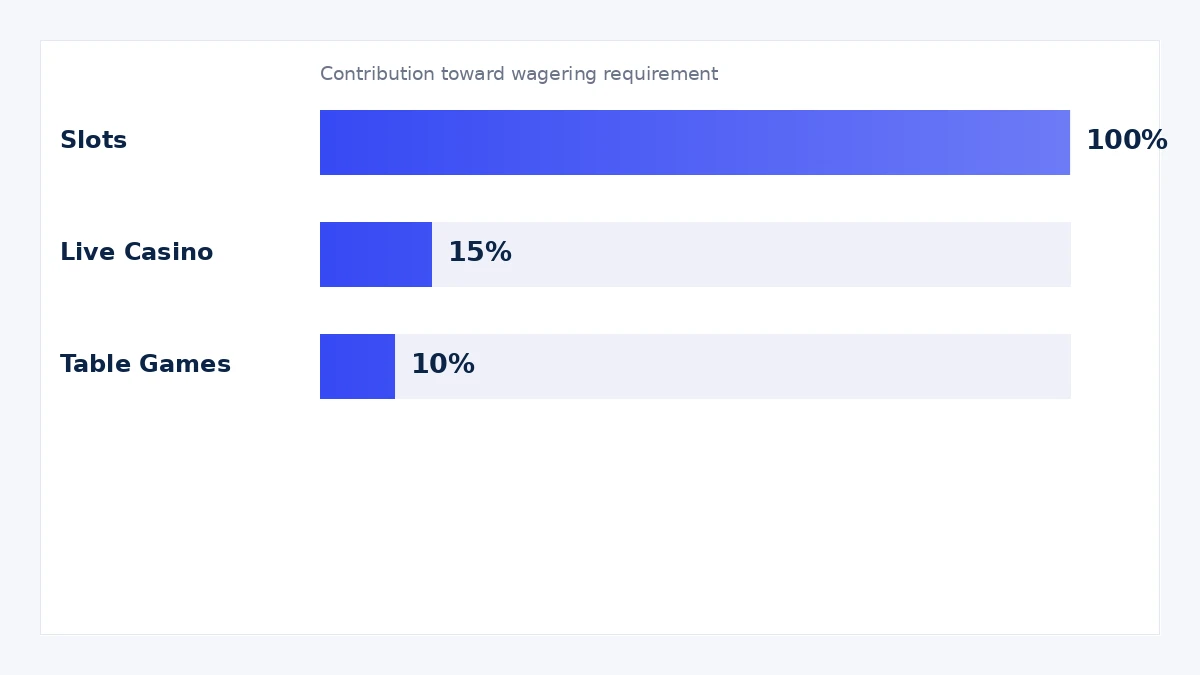
Wagering progress isn’t tracked evenly across every game in the casino. Slots typically contribute 100% of each bet toward the requirement, while table games such as blackjack often contribute as little as 10%, and live dealer or video poker tables are frequently reduced or excluded entirely. A $50 bet on a slot counts as $50 of progress; the same $50 bet on a 10%-weighted table game counts as $5. Playing the wrong game type can leave the wagering total barely moving even after a genuine session of real bets, so checking the weighting table before choosing where to play the bonus through matters as much as the multiplier itself.
Sticky vs. Non-Sticky Bonuses
A sticky bonus stays locked to the account for play only — you can use it to generate winnings, but the bonus amount itself is never withdrawable, and a max cashout cap often limits how much of those winnings you can take out regardless of how high the balance climbs. A non-sticky bonus sits alongside your deposit rather than merging into it: your own funds are drawn down first, so you can withdraw at any point as long as the balance stays above the bonus amount, and the bonus only needs to clear wagering if you actually play into it. Non-sticky offers are generally the more flexible of the two, but neither type skips the wagering requirement itself.
The Fine Print That Actually Decides Value
Two conditions sit outside the headline multiplier and routinely catch players out. A max bet rule caps the size of any single wager placed while a bonus is active — often as low as $5–10 — and betting above it can void the bonus and any winnings attached to it, even accidentally. A time limit, typically 7 to 30 days, sets a hard deadline for clearing the wagering requirement; unfinished progress and any unwithdrawn bonus funds are usually forfeited once it passes. Both conditions matter more than the headline bonus amount when judging whether an offer is realistically clearable.
How Wagering Terms Differ Across Bonus Types
The mechanics above apply to every offer, but the specific numbers shift by bonus type. Welcome bonuses and sign-up bonuses tend to carry the highest deposit-plus-bonus multipliers since they’re the largest offer a casino makes. No deposit bonuses and free spins usually carry smaller absolute amounts but often the tightest max cashout caps, since there’s no deposit backing the offer. First deposit bonuses generally follow standard bonus-plus-deposit terms, while recurring offers like daily bonuses and birthday bonuses are usually smaller but carry shorter, more forgiving wagering windows since they repeat.
A Quick Checklist Before You Claim Any Bonus
Before opting in, confirm the wagering multiplier and whether it applies to the bonus alone or to bonus plus deposit, check the game-weighting table for whatever you actually plan to play, note the max bet limit and set your stakes below it, find the max cashout cap if one applies, and mark the expiry date somewhere you’ll actually see it. None of this takes longer than reading the terms page once — skipping it is what turns a genuine offer into wasted deposit money.
Where to Go From Here
The full range of current offers by type is on the casino bonuses page. If the games you’re planning to clear a bonus through are slots, our RTP and volatility guide covers how to read a slot’s odds before you commit a session to it, and if crash games are part of the plan, see how crash games work for the mechanics behind titles like Aviator and Limbo.