Blog
RTP and Volatility Explained: How to Read a Slot’s Numbers
Every slot carries two numbers that matter more than the theme or the reels: RTP and volatility. One tells you how much of your money comes back over time, the other tells you how that money arrives — in a steady trickle or in rare, large bursts. Neither number predicts your next spin, but together they explain why two slots with the same RTP can feel completely different to play, and why picking the wrong volatility for your bankroll empties it faster than the odds alone would suggest.
What RTP Actually Measures
RTP (return to player) is the percentage of everything staked on a slot that the game is mathematically designed to pay back over a very large number of spins — millions, not hundreds. A slot built with a 96% RTP returns $96 for every $100 wagered across its full mathematical cycle; the remaining 4% is the house edge. That figure comes from the game’s own math model — symbol probabilities, reel mapping, paytable values and how bonus features pay — and independent testing labs confirm the live game matches that model before it ships. Most online slots in 2026 sit between 94% and 97% RTP; anything at 96% or above is generally considered player-friendly.
The number that trips people up is the word “theoretical.” RTP describes millions of spins pooled together, not your Tuesday-night session. A 96% RTP slot can run cold for hundreds of spins and still be working exactly as designed — the math only evens out at a scale no single player will ever personally reach.
What Volatility Actually Measures
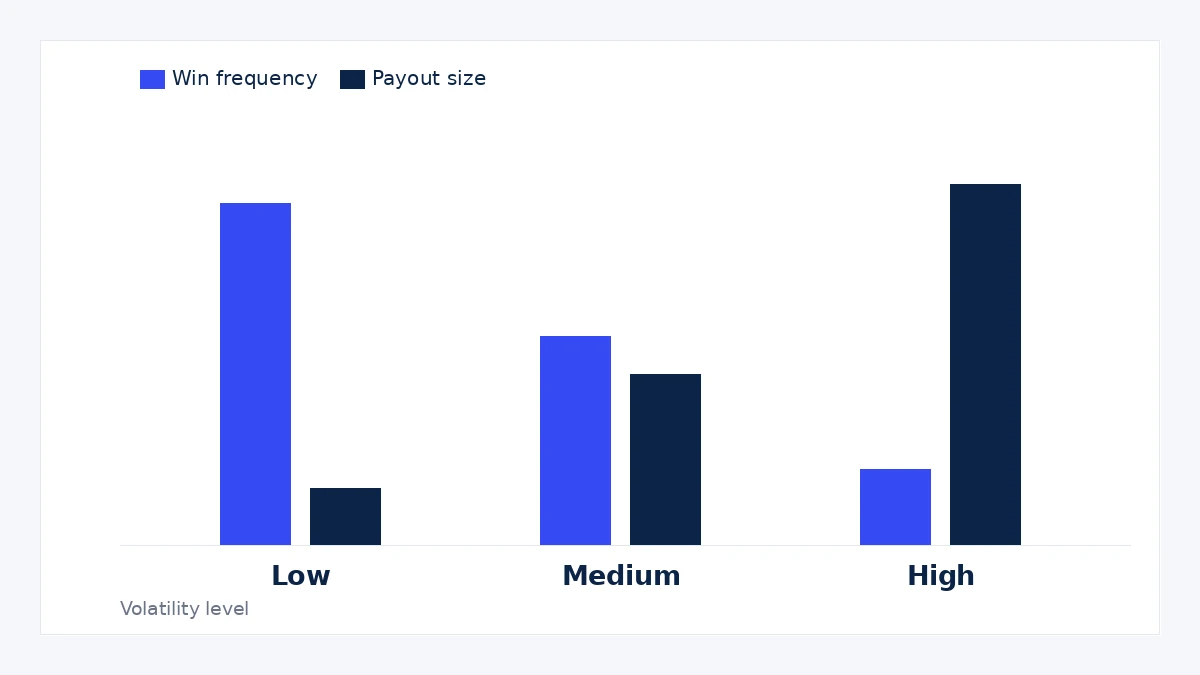
Volatility (also called variance) describes how a slot’s payouts are distributed, independent of how much it pays back overall. Two slots can both run 96% RTP and still feel nothing alike: one pays small amounts often, the other pays rarely but big.
Low volatility
Frequent, small wins — often landing every 3 to 5 spins — that keep the balance moving without large swings in either direction. Sessions last longer on a fixed budget, but the ceiling on any single win is modest.
Medium volatility
A blend of the other two: regular smaller wins alongside the chance of a genuinely large payout through a bonus feature. Big Bass Bonanza, for example, runs medium volatility — steady base-game action with its payout potential concentrated in the fishing bonus round.
High volatility
Long stretches with no win, offset by payouts that can run into the thousands of times the stake — some high-volatility slots advertise potential wins above 10,000x. This is the format built for players chasing a specific big hit rather than a long, even session.
RTP and Volatility Don’t Move Together
These two numbers answer different questions, so neither one predicts the other. A high-RTP slot can be low or high volatility, and a low-RTP slot can be either too. Judging a game by RTP alone misses how the payouts actually land during a real session; judging it by volatility alone misses how much of your stake comes back over time. Reading both together, before you commit a budget, is what actually tells you what to expect.
Matching Volatility to Your Bankroll and Session Length
A small, fixed budget generally fits low volatility better — frequent small returns stretch that budget across more spins and more playing time. A larger bankroll can absorb the dry spells that come with high volatility, and the standard adjustment is to lower the individual bet size rather than the total funds set aside, so there’s enough runway left for a big payout to actually land before the budget runs out. Medium volatility sits in between and is a reasonable default when you’re not sure which way to lean.
The “Hot and Cold Slot” Myth
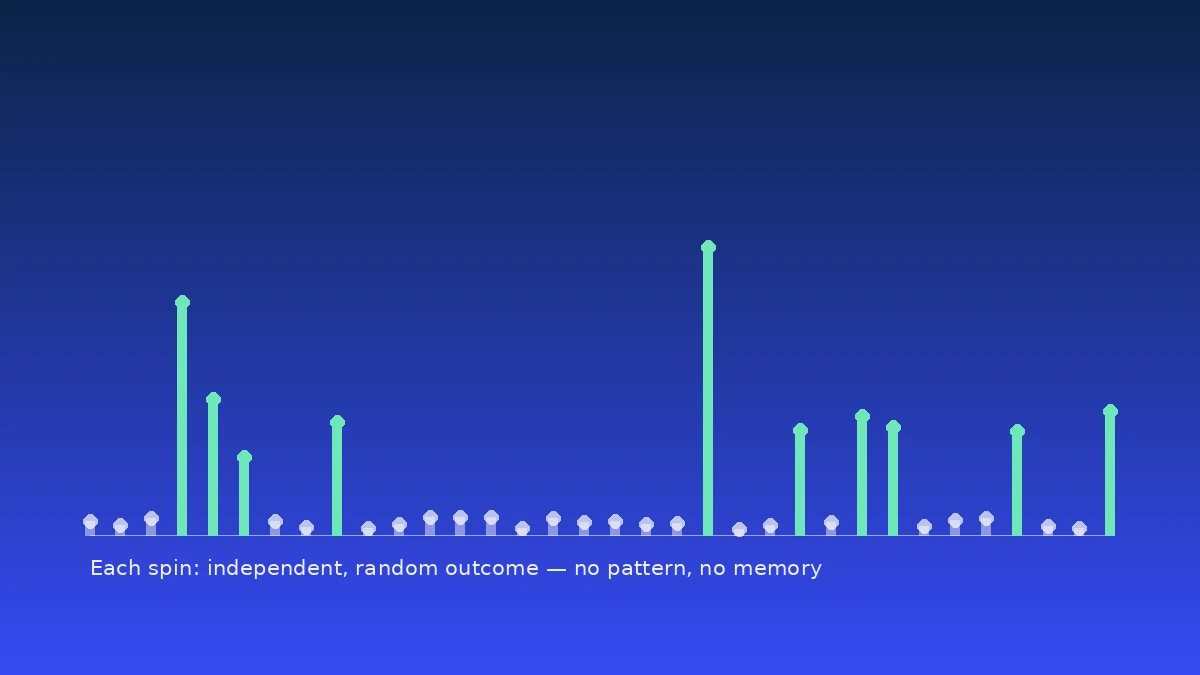
A slot’s random number generator has no memory of previous spins and no running total of what it “owes” a player. Every spin is generated independently, so a machine that just paid out isn’t more likely to pay again, and one that hasn’t paid in 200 spins isn’t “due.” What actually produces long dry streaks followed by big hits is volatility working exactly as designed — not a machine warming up or cooling down. Switching to a different slot changes the game’s math profile, not your odds on the one you just left.
How to Check the Real RTP Before You Play
The RTP that matters is the one built into the exact version of the game running on the exact casino you’re using — some studios license different RTP configurations of the same title to different operators. The in-game rules, paytable or help panel is the most reliable source; it reflects the live build you’re actually playing rather than an average figure quoted elsewhere. For crash-style games specifically, the mechanics and published RTP figures work a little differently — that’s covered in our crash games guide.
Where to Go From Here
The full game library, with provider details and individual volatility ratings, is on the slots page. If you’re deciding between a steady session and a shot at a big multiplier, that’s the volatility trade-off described above playing out in practice — check the rules panel on any title before you commit a budget to it.